
Universal Pipette Tips
Disposable pipette tips designed to fit single and multichannel pipettes from most manufacturers; offer acceptable performance compared to pipette specific tips and can be used with a variety of pipette models.
Single-use universal pipette tips are designed for compatibility with most mechanical and electronic single and multichannel pipettors.
Universal pipette tips are available in a range of types, sizes, colors, styles, and packaging configurations and may be designed for specific purposes or tasks.
- Capacity or volume based on the pipettor size
- Filters to reduce contamination and cross-contamination
- Color
- Sterility or autoclavability
- Tip style: beveled, tapered, wide bore, round, flat, or gel-loading
- Length: short or extended
- Purity: metal-free or DNase-, RNase-, ATP-, Bioburden-, PCR inhibitor-, endotoxin-, or pyrogen-free for genomic and biologic applications
- Surface treatments to reduce retention
- Packaging options to help facilitate re-stocking or eliminate waste

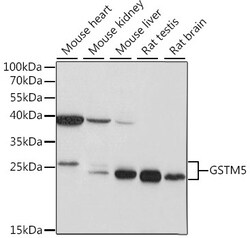
ABclonal Technology GSTM5 Rabbit pAb

This gene encodes a glutathione S-transferase belonging to the mu class, part of a family of enzymes involved in detoxifying electrophilic compounds, including carcinogens, drugs, toxins, and oxidative stress products. These enzymes function by conjugating harmful substances with glutathione. The mu class genes are clustered on chromosome 1p13.3 and are highly polymorphic, which can affect an individuals susceptibility to toxins and influence the toxicity and efficacy of certain drugs. Genetic variations in the substrate-binding domains and tissue expression patterns have allowed for the diversification of these genes to handle an increasing number of foreign compounds.

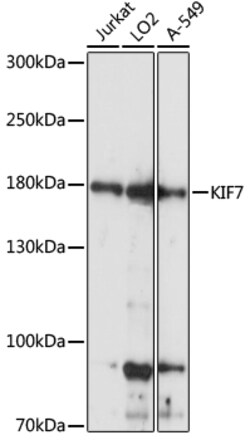
ABclonal Technology KIF7 Rabbit pAb
This gene encodes a cilia-associated protein belonging to the kinesin family. This protein plays a role in the sonic hedgehog (SHH) signaling pathway through the regulation of GLI transcription factors. It functions as a negative regulator of the SHH pathway by preventing inappropriate activation of GLI2 in the absence of ligand, and as a positive regulator by preventing the processing of GLI3 into its repressor form. Mutations in this gene have been associated with various ciliopathies.


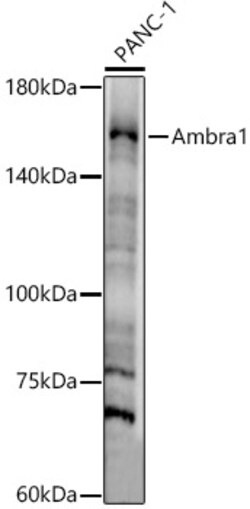
ABclonal Technology Ambra1 Rabbit pAb
Enables GTPase binding activity and ubiquitin protein ligase binding activity. Involved in macroautophagy, positive regulation of phosphatidylinositol 3-kinase activity, and response to mitochondrial depolarisation. Located in cytosol. Colocalizes with mitochondrion. Biomarker of multiple system atrophy.
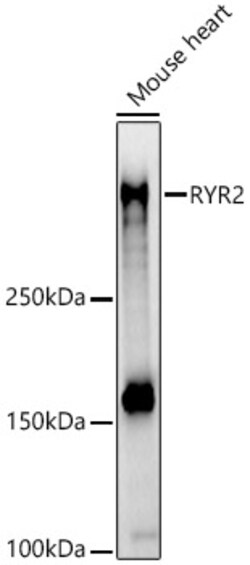
ABclonal Technology RYR2 Rabbit pAb
This gene encodes a ryanodine receptor found in cardiac muscle sarcoplasmic reticulum. The encoded protein is one of the components of a calcium channel, composed of a tetramer of the ryanodine receptor proteins and a tetramer of FK506 binding protein 1B proteins, that supplies calcium to cardiac muscle. Mutations in this gene are associated with stress-induced polymorphic ventricular tachycardia and arrhythmogenic right ventricular dysplasia.
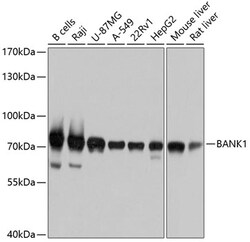
ABclonal Technology BANK1 Rabbit pAb
The protein encoded by this gene is a B-cell-specific scaffold protein that functions in B-cell receptor-induced calcium mobilization from intracellular stores. This protein can also promote Lyn-mediated tyrosine phosphorylation of inositol 1,4,5-trisphosphate receptors. Polymorphisms in this gene are associated with susceptibility to systemic lupus erythematosus. Alternative splicing results in multiple transcript variants.
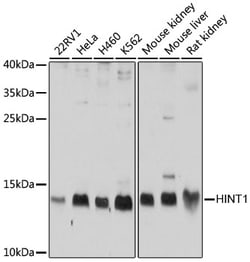
ABclonal Technology HINT1 Rabbit pAb
This gene encodes a protein that hydrolyzes purine nucleotide phosphoramidates substrates, including AMP-morpholidate, AMP-N-alanine methyl ester, AMP-alpha-acetyl lysine methyl ester, and AMP-NH2. The encoded protein interacts with these substrates via a histidine triad motif. This gene is considered a tumor suppressor gene. In addition, mutations in this gene can cause autosomal recessive neuromyotonia and axonal neuropathy. There are several related pseudogenes on chromosome 7. Several transcript variants have been observed.
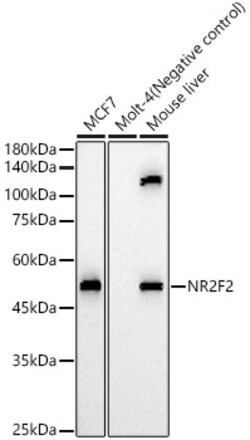
ABclonal Technology NR2F2 Rabbit pAb
This gene encodes a member of the steroid thyroid hormone superfamily of nuclear receptors. The encoded protein is a ligand inducible transcription factor that is involved in the regulation of many different genes. Alternate splicing results in multiple transcript variants.
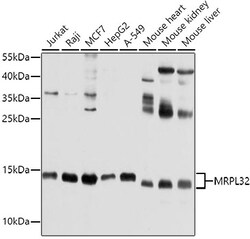
ABclonal Technology MRPL32 Rabbit pAb
Mammalian mitochondrial ribosomal proteins are encoded by nuclear genes and help in protein synthesis within the mitochondrion. Mitochondrial ribosomes (mitoribosomes) consist of a small 28S subunit and a large 39S subunit. They have an estimated 75% protein to rRNA composition compared to prokaryotic ribosomes, where this ratio is reversed. Another difference between mammalian mitoribosomes and prokaryotic ribosomes is that the latter contain a 5S rRNA. Among different species, the proteins comprising the mitoribosome differ greatly in sequence, and sometimes in biochemical properties, which prevents easy recognition by sequence homology. This gene encodes a 39S subunit protein that belongs to the L32 ribosomal protein family. A pseudogene corresponding to this gene is found on chromosome Xp.
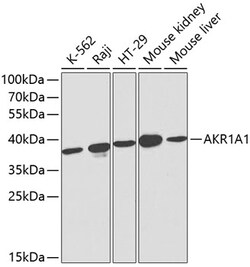
ABclonal Technology AKR1A1 Rabbit pAb
This gene encodes a member of the aldo/keto reductase superfamily, which consists of more than 40 known enzymes and proteins. This member, also known as aldehyde reductase, is involved in the reduction of biogenic and xenobiotic aldehydes and is present in virtually every tissue. Multiple alternatively spliced transcript variants of this gene exist, all encoding the same protein.
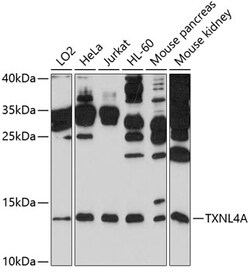
ABclonal Technology TXNL4A Rabbit pAb
The protein encoded by this gene is a member of the U5 small ribonucleoprotein particle (snRNP), and is involved in pre-mRNA splicing. This protein contains a thioredoxin-like fold and it is expected to interact with multiple proteins. Protein-protein interactions have been observed with the polyglutamine tract-binding protein 1 (PQBP1). Mutations in both the coding region and promoter region of this gene have been associated with Burn-McKeown syndrome, which is a rare disorder characterized by craniofacial dysmorphisms, cardiac defects, hearing loss, and bilateral choanal atresia. A pseudogene of this gene is found on chromosome 2. Alternative splicing results in multiple transcript variants.
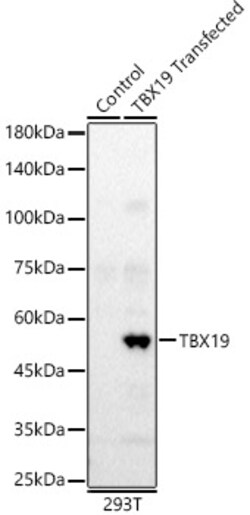
ABclonal Technology TBX19 Rabbit pAb
This gene is a member of a phylogenetically conserved family of genes that share a common DNA-binding domain, the T-box. T-box genes encode transcription factors involved in the regulation of developmental processes. Mutations in this gene were found in patients with isolated deficiency of pituitary POMC-derived ACTH, suggesting an essential role for this gene in differentiation of the pituitary POMC lineage. ACTH deficiency is characterized by adrenal insufficiency symptoms such as weight loss, lack of appetite (anorexia), weakness, nausea, vomiting, and low blood pressure.
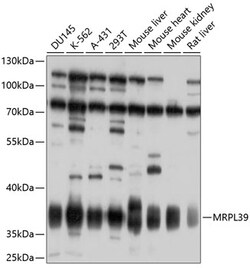
ABclonal Technology MRPL39 Rabbit pAb
Mammalian mitochondrial ribosomal proteins are encoded by nuclear genes and help in protein synthesis within the mitochondrion. Mitochondrial ribosomes (mitoribosomes) consist of a small 28S subunit and a large 39S subunit. They have an estimated 75% protein to rRNA composition compared to prokaryotic ribosomes, where this ratio is reversed. Another difference between mammalian mitoribosomes and prokaryotic ribosomes is that the latter contain a 5S rRNA. Among different species, the proteins comprising the mitoribosome differ greatly in sequence, and sometimes in biochemical properties, which prevents easy recognition by sequence homology. This gene encodes a 39S subunit protein. Two transcript variants encoding distinct isoforms have been described. A pseudogene corresponding to this gene is found on chromosome 5q.
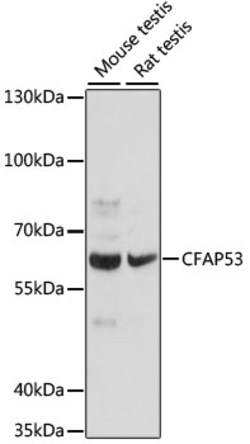
ABclonal Technology CFAP53 Rabbit pAb
This gene belongs to the CFAP53 family. It was found to be differentially expressed by the ciliated cells of frog epidermis and in skin fibroblasts from human. Mutations in this gene are associated with visceral heterotaxy-6, which implicates this gene in determination of left-right asymmetric patterning.
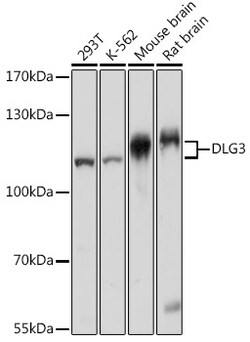
ABclonal Technology DLG3 Rabbit pAb
This gene encodes a member of the membrane-associated guanylate kinase protein family. The encoded protein may play a role in clustering of NMDA receptors at excitatory synapses. It may also negatively regulate cell proliferation through interaction with the C-terminal region of the adenomatosis polyposis coli tumor suppressor protein. Mutations in this gene have been associated with X-linked cognitive disability. Alternatively spliced transcript variants have been described.